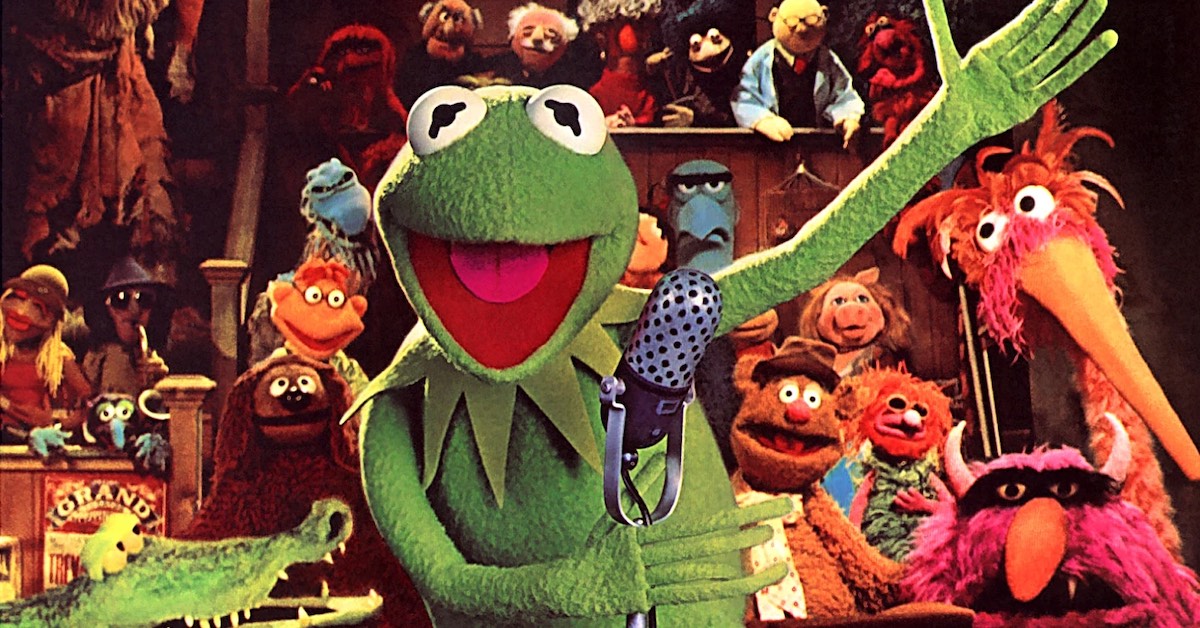
The Muppet Show album (1977) Track by Track: Side A
Thursday, February 16th, 2023
Released four months after Rumours and four months before Never Mind The Bollocks, Here’s The Sex Pistols, The Muppet Show ranks among the great albums of 1977. A compilation of sketches from the first season with interstitials recorded for the album, the genius here is the highly eclectic selection of songs covered by the “monster puppets”.
You can hear the fascinating range of the source material by listening to this playlist of original or alternative versions:
Before we get things started, here’s a brief introduction to the original artifact.
The album is out of print and not available on streaming but you can listen here on YouTube.
The Muppet Show Theme
The Entire Cast
Jim Henson, Sam Pottle
That iconic low rumbling piano and rolling snare. “Ladies and gentlemen, it’s the Muppet Show”. Coarse stabs of brass continue to build tension until the single strike of a triangle and the low honk of Zoot’s saxophone give us the all clear: “It’s time to play the music.”
At first the screeching females, then the huffy males, then together, the chorus line spell out all the preparations that are required for tonight’s performance.
A key change and Fozzie takes the spotlight: “Did you know that George the janitor is so cheap, that his wallet has an unlisted pocket?” Is this a joke about tax evasion at the very top of a children’s album? “Am I too hip for the room?”
Finally we throw to Kermit. It really makes him happy to introduce to us the “first original, genuine, no-money-back-guaranteed, Muppet Show Cast Album!” Impossibly layered vocals lead up to a massive crescendo, and then the crashing of stage props. It’s inspirational, it’s sensational, it’s going to make a mess. This is what we call The Muppet Show.
Mississippi Mud
The Gogolala Jubilee Jugband
James Cavanaugh, Harry Barris
The Gogolala Jubilee Jug Band, a quintet of scruffy Whatnots, absolutely tear through the first number. Mississippi Mud was the A side of a 1927 single by Paul Whiteman’s Rhythm Boys, a group that included the young Bing Crosby.
Manic strumming and knee-slapping keep an urgent tempo, with yee haws and scatting transporting us to the Deep South. “That was wonderful! That was great!” conclude Statler and Waldorf, although their opinion quickly changes as they reflect further.
Mahna Mahna
Mahna Mahna and the Snowths
Piero Umiliani
The colossus. The first sketch of the first episode of the first season: they knew what they had and it remains the most famous Muppet Show sketch of all times. Rimshots, xylophone, muted trumpet, soft doo doos by the Snowths and the inhuman growl of Mahna Mahna himself, burned into the minds of generations.
Based on “Mah Na Mah Na” by Italian composer Piero Umiliani, the Muppetised version was already famous long before the Muppet Show premiered, making an appearance on Sesame Street and the Ed Sullivan Show among many others. Despite its bawdy roots in the sex documentary Sweden, Heaven and Hell, it has become an immortal children’s anthem, inspiring everyone from Cake to Banana Boat.
The Great Gonzo Eats a Rubber Tire to “The Flight of the Bumble Bee”
The Great Gonzo
Nikolai Rimsky-Korsakov
In Mahna Mahna’s long shadow rises the Great Gonzo to eat a rubber tyre to The Flight of the Bumblebee. Like most children, I didn’t dip further into Rimsky-Korsakov or even explore the rest of his turn-of-the-century opera The Tale of Tsar Saltan, perhaps to my detriment. While this may not be the definitive version, the circus drums and Gonzo’s relentless chewing make it a memorable one.
Mr. Bassman
Floyd and Scooter
Johnny Cymbal
Originally written and recorded by Johnny Cymbal and released in 1963, this is a thrilling highlight of Side A performed by Scooter and Floyd. The simple I-vii-VI-V “Heart and Soul” progression is elevated by the bom boms of the Bassman and the lead vocal of his admirer. Presented more earnestly than the previous tracks, Mr. Bassman nonetheless retains the cheeky fun of the album, especially during the bass vocal lesson that is the song’s centerpiece.
Cottleston Pie
Rowlf
A. A. Milne, William S. Haynie
A. A. Milne’s nonsensical lyrics are set to music by William S. Haynie and performed by Rowlf on solo piano. Aside from his folksy explanation of the modulation to G# minor, the piece has a gentle, soothing melancholy and is perfectly placed before the oncoming sounds of anguish.
The Amazing Marvin Suggs and His Muppaphone Play “Lady of Spain”
The Amazing Marvin Suggs and His Muppaphone
Tolchard Evans, Erell Reaves (Stanley J. Damerell), Robert Hargreaves, Henry Tilsley
The callousness shown by Marvin Suggs towards the members of his Muppaphone encourage us to side immediately with the furry creatures over the would-be star of this piece. “Another day, another headache” complains one, an uncomfortable reminder of our daily grind.
Lady of Spain itself is almost unrecognisable in this version. Composed in 1931, with a famous rendition by Eddie Fisher in 1952, only the chord changes survive here. As a snapshot of class struggle it shines, every “Ow!” deeply felt and not soon forgotten.
Pachalafaka
Uncredited tourist in Turkey
Irving Taylor
The eccentric crate-digging continues with this cover of Pachalafaka, originally performed by American saxophonist Earl Brown and released on the 1958 Warner Brothers compilation Terribly Sophisticated Songs - A Collection of Unpopular Songs for Popular People. It tells the story of a tourist absolutely enchanted by the titular woman who belly dances aggressively at him during the sketch.
The Muppets do fall into cultural stereotypes at times; the flamboyantly Spanish Marvin Suggs (Olé, olé, olé, olé!) is followed here by the demurely flirtatious Turkish dancer and sung by a blue man in a turban. So problematic is this sketch that it earned the increasingly common disclaimer on Disney+: “This program includes negative depictions and/or mistreatment of people or cultures”. (I assume it was for this and not for the guest saying “Dankeschön Herr Kermit. It was mein pleasure” at the end of the show.) More surprising is that the far more offensive Swedish Chef was not given this disclaimer in the next episode.
Perhaps too steamy for American audiences, this track was only included on international releases of the album, such as the one I owned.
Lydia the Tattooed Lady
Kermit
Yip Harburg, Harold Arlen
Kermit’s first solo number is a more heartfelt take on this tune lifted from the Marx Brothers’ 1939 film At the Circus. Lydia has a highly educational set of tattoos depicting scenes from around the globe and can even create a crude form of animation by relaxing certain muscles. Where Groucho rushes and stumbles and makes her the butt of the joke, Kermit stretches out, taking his time in a show of genuine admiration for Lydia.
Halfway Down the Stairs
Robin
A. A. Milne, Harold Fraser-Simpson
Another poem by A. A. Milne and another solo piano accompaniment, this time backing Robin, Kermit’s nephew. Robin’s parentage is unknown but his existence is unsurprising given estimates of up to 2,353 Kermit siblings (claimed in The Muppets Character Encyclopedia from 2014). It’s an affecting tune, made more so by Robin’s diminutive size in relation to the stairs. We’re halfway down them and halfway through the album. It’s time to flip to side B.
Thanks for coming along for this journey through the record I scratched up the most as a kid, ruining the comic timing in Side B’s Veteranarian’s Hospital sketch. Ultimately the Muppets reflect a silliness and a sentimentality that are at the core of my being.
Join me next time for Side B.
Related:
- cultural appropriation,
- puppetry,
- track by track,
- the muppets